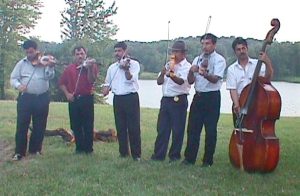
Press kit, 2001: English and Hungarian versions.
Transylvanian Grunge – the Tükrös Band
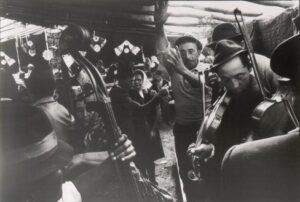
Transylvanian grunge. Jimi Hendrix on violin. The primal syncopations of Tükrös (pronounced Tuke-rersh) are almost impossible to describe. Formed in 1986, this 6 member band from Budapest has been instrumental in the revival of Hungarian village music. “There is no need to improve it,” explains Tükrös’ viola player Péter Árendás, “only to play it as authentically as possible.” The group’s line-up of violins, violas, double bass, cimbalom (cymbal) and vocals will transport you into the village lives of the films Gadjo Dilo and Latcho Drom. Perhaps Béla Bartók described it best; “beautiful to the ear, beautiful to the eye.”
Twenty to twenty five years ago, our “supporters” were often amazed; how could outstanding, stage-trained musicians, take on, what they saw as the incredibly menial task of collecting and studying village music? What a pity, they said, that someone else isn’t doing this work instead; for example, someone who wouldn’t be capable of doing any other music work anyway. Many who were in reality crazy, looked at our persistence as some kind of obsession. Poor things didn’t have a clue, how much it meant to us be able to personally go to the villages, so that we ourselves could see, live through and hear this music which has determined the direction of our work.
Béla Bartók, About Folk Music, 1931
The music they play comes from the villages of Hungary and Transylvania, and was played by Hungarians, Gypsies and Romanians for parties, weddings, funerals, christenings, army draftees and any major event occurring in a village calendar. Through the music and dance, people grew up and grew old, learning to express themselves and relate to each other. It was their way of releasing worries and stress and expressing their joy and sorrow.
With the influx of modern technology, different music and media have taken the place of music and dance in a villager’s life. In some areas of Hungary and throughout Transylvania, this music and tradition can still be found today, but it is fast disappearing as the old musicians, dancers and singers die. Tükrös are part of a revival of village/peasant music and dance that has been happening in Hungary over the last 20 to 30 years.
They have learnt the music by travelling to villages and learning not only the music, but the customs and traditions of the place, directly from the people themselves. Through their continuing contact and friendship with the village musicians, they have developed an emotional tie to the music and people, that can be heard in their playing.
The Band
Formed in Budapest 1986, the band has toured throughout Europe and Australia both in its own right and with various dance ensembles. They regularly play in Hungary at major traditional music festivals and events, in Táncház (dance-houses), music clubs, at parties and weddings. At festivals and music and dance camps they can always be found playing somewhere to a crowd of dancers and partiers. They released their first CD in 1996 and the second in 2000. In 2001 the band was awarded the distinction of ‘Young Masters of Folk Arts’. Each Year the group presents a music and dance camp where they teach these traditions to the next generation. Tükrös are also very involved in the recording and collecting of Hungarian music from the villages of Hungary and Transylvania (Romania).
Tour Highlights
- Hungary: biweekly club in Fonó Budai Zeneház. Hungarian Dance House Festival: annually since 1990. Diósgyőr, Kaláka Folk Days 1998. Hajdúszoboszló, Folk Weekend: annually since 1997. Szolnok Folk Festival 1998. Tabán (Téka Ensemble is 20 years old) Budapest 1996. Egri Folk Weekend 2000.
- Outside Hungary: Felvidéki Dance House Festival (Slovakia): annually since1995. Miercurea Ciuc (Romania) 2001. Strassburg 2001. Paris 2001. Slovakian Folk Festival, Kosice (Slovakia) 2001. Canberra International Folk Festival (Australia) 2000. Darmstadt (Germany) 2001. Frankfurt International Book Fair 1999. Brno (Czech Republic)1998, 1999. Tabor International Folk Festival (Czech Republic)1998. Dortmund (Germany) 1994, 1995, 1996. Workshops in Dortmund 1995, 1996. Prague Hungarian House of Culture 1990, 1991, 1992, 1993, 1994.
- Tours with dance groups: Greece 1993, Italy 1992, Sweden 1991, France 1991, Sweden 1990.
- Radio Recordings: 1998, 1993.
- Television recordings: 1998, 1997, 1994, 1993
Discography
- 1996 – Magyar Népzene (Hungarian Village Music)
- 2000 – Szatmári Népzene az 1900-as évekből (Hungarian Village Music from the 20th Century). This album won the golden prize of the Hungarian Artistic Academy in 2000.
Band Members
Attila Halmos
First violinist (primás), band leader and vocalist
Attila Halmos has played violin for 21 years and is a professional musician. He learnt both from musicians in Hungary and from travelling to Transylvania, directly from the musicians there.
He teaches violin in Piliscsaba weekly, and at the Tükrös Camp once a year. He has toured with several folk dance groups (Bartók, Csepel, etc.) and different musicians throughout Europe.
“Without this music I would never have been inspired to pick up the violin.”
Péter Árendás
3- and 4-string viola (brácsa)
Péter Árendás has played viola for 16 years and is a professional musician. He has toured with all the best musicians in Hungary in one band or another and with many folk dance groups (Bartók, Csepel, Bihari, etc.) In Europe, Japan and Taiwan. He is the Musical Director of the professional Budapest Dance Ensemble. He has taught folk music for 11 year in Szeged, Debrecen and also ELTE University in Budapest. He also plays with the Gázsa Ensemble and works at Fonó Music studios, Budapest recording and cataloguing bands from the villages of Hungary, Transylvania (Romania) and Slovakia.
“No matter what music you play from previous ages, you have to get to know the age. You have to know what role music played, and you have to try to understand those who used to play that music, and who used to listen to it. [That is why] I believe that the music played in villages is perfect: there is no need to improve it, only to play it as authentically as possible”
Gergely Koncz
Violin (hegedű) and 3- and 4-string viola (brácsa)
Gergely Koncz is a professional musician, he is the leader violinist of ‘Young Hearts’ Dance Ensemble (Bratislava, Slovakia). Over the years he has toured with several folk musicians from Hungary and Slovakia, and with Veszprém, Bakony, Szászorszép Folkdance groups (Hungary), Hajós, Szőttes and ‘Young Hearts’ Folkdance Groups (Slovakia) in Europe, Canada Venezuela and Australia. He has taught in the Tükrös and Méta Music Camps, in Debrecen, and the music schools of Veszprém, Budafok and Székesfehérvár.
Endre Liber
Hammer dulcimer (cimbalom) and 3-string viola (brácsa)
Endre Liber has played 3 string viola for 20 years and cimbalom for 14 years. He has toured with many different combinations of musicians in Europe, Japan and Taiwan. He also plays in the Gázsa ensemble and the Marton ensemble.
“Those, from who we try to learn the secrets of their music, have been passing on treasure house of melodies and their particular style of performance from generation to generation. These melodies and this style of performance, coloured by the performer’s personality produces a way of performing music that always reaches the heart of the listener.”
Éva Korpás
Vocalist
Éva started her career in Hungarian folklore as a dancer and singer with the Hajós dance group. She started singing professionally with the group Tükrös in 1995 and is featured on their CD Tükrös. Released by Fonó Records 1996. She has toured with the group throughout Europe, Hungary and Slovakia.
“For me the most wonderful way to express human emotions is through Hungarian folk songs and music”
András Lelkes
Double bass (bőgő)
András Lelkes plays both Jazz and folk music and has played bass for 14 years. He has played with many different groups in Hungary – Dr. Valter & the lawbreakers (blues) and Cifra Hungarian folk music ensemble. He has also toured throughout Europe with Tükrös and various dance ensembles.
“I like all kinds of music, but above all, this is the one that gives me the most pleasure.”
A Tükrös Zenekar bemutatása
A magyar népzenét játszó zenekarok élvonalába tartozó Tükrös Zenekar 1986-ban alakult Budapesten. Fő célkitűzésük a hangszeres magyar népzene minél hitelesebb tolmácsolása, stílusos előadása, szórakoztató formában. A magyar nyelvterület számos vidékének zenéjével foglalkoznak, de e sokszínű népzenén belül főképpen szatmári (Északkelet-Magyarország) és különböző mezőségi (Erdély) zenéket játszanak a hagyományos vonószenekari felállásban (hegedű-brácsa-bőgő), cimbalommal kiegészítve. A zenekar számos alkalommal szerepelt különböző rádió-és TV-csatornákon. Több hazai gyűjteményes népzenei lemezen szerepeltek, az első önálló albumukat a Fonó Records adta ki 1996-ban (Tükrös együttes: Magyar népzene). Az ezredfordulóra a zenekar saját kiadású lemezt jelentetett meg „Szatmári népzene az 1900-as évekből” címmel. A lemez elnyerte a Magyar Művészeti Akadémia Arany Oklevelét. Ugyancsak 2000-ben készítették 15 perces videó-referencia anyagukat is. Idén a Népművészet Ifjú Mestere címet is elnyerték.
A Tükrös Zenekarnak immár 5 éve állandó klubja működik a Fonó Budai Zeneházban (1116 Budapest, Sztregova u. 3.). Ezt a zenei stílust elsősorban a rendszeres gyűjtőutakon megismert idős falusi zenészektől, és a róluk készült korábbi felvételek alapján tanulták, ezek az utak erős érzelmi és szakmai töltést jelentenek mind a mai napig.
A zenekar az eltelt évek alatt több néptáncegyüttes zenei kíséretét látta el, emellett koncerteket ad és táncházakat tart. Évek óta részt vesznek a főbb magyarországi népzenei rendezvényeken (pl. Országos Táncháztalálkozó, diósgyőri Kaláka-Folknapok, vidéki folkfesztiválok: Debrecen, Eger, Hajdúszoboszló, Szeged, Szolnok stb.), de külföldön is sokfelé vendégszerepeltek. Többször felléptek Szlovákiában, Csehországban (Brno, Prága, Tabor-i fesztivál), Németországban (Dortmund, Frankfurt, München), emellett jártak Ausztriában, Svájcban, Olaszországban, Franciaországban, Svédországban, Görögországban is. A Tükrös Zenekar 1999 őszén meghívottként fellépett a Frankfurti Könyvvásáron, és 2000 tavaszán egyhónapos sikeres ausztráliai koncertturnén vett részt (Sydney, National Folk Festival, Canberra).
Az együttes tagjai közül többen tanítanak is: tudásukat egyfelől tanfolyamokon osztják meg a fiatalabb nemzedékkel (pl. Budapesten, Szegeden, a Délvidéken Bácskatopolyán, vagy a jászberényi Nemzetközi Néptánctáborban), másfelől saját nyári népzenei táborukban (Debrecen 1996, 1997). A következő Tükrös Népzenei Tábor 2001. július utolsó hetében került megrendezésre Simonpusztán. A zenekar tudományos népzenekutatással is foglalkozik: ketten a századvég legnagyobb szabású hangszeres népzenei gyűjtésének, az „Utolsó Óra” programnak állandó munkatársai.
A hattagú zenekar koncertjeinek zenei anyaga többnyire a megjelent lemezeikre épül. A körülbelül 2*45 perces változatos, a magyar népzene ízeit magas színvonalon bemutató programjuk igény szerint kiegészül két professzionális táncos bemutatójával is. Ők a leglátványosabb magyar táncokat táncolják a Tükrös együttes zenéjére, gyönyörű, eredeti magyar viseletekben.
A Tükrös Zenekar tagjai
Korpás Éva (ének)
Komáromban él, tanítónő és gyermek-néptáncpedagógus. Gyerekkora óta énekel, közel 15 éve népdalt. „Az emberi érzelmek kifejezésére számomra nincs csodálatosabb, mint a magyar népdal, népzene.”
Halmos Attila (hegedű)
Édesapja Halmos István népzenekutató, így már kis korában megismerkedett a magyar népzenével. Hét éves kora óta hegedül, először klasszikus zenét, majd népzenét. Számtalan alkalommal járt erdélyi falvakban, ahol nem csak elsajátította a stílushű játékot, megismerte a népszokásokat, de többször zenélni is megfogadták egy-egy falusi lakodalomban vagy bálban.
Koncz Gergely (hegedű, brácsa)
Veszprémi születésű, gyerekkorában ő is klasszikus hegedűt tanult, de már 10 éve „csak” népzenével foglalkozik. Különösen elmélyedt a magyarpalatkai játékstílus tanulmányozásában (ezt alátámasztja számos ottani gyűjtése), de – mint az „Utolsó Óra” munkatársa – páratlan ismeretanyaggal és hanganyaggal rendelkezik a történelmi Magyarország teljes területéről. Állandó zenésze a pozsonyi Ifjú Szívek, és zenei vezetője a Szőttes néptáncegyütteseknek.
Árendás Péter (3-és 4-húros brácsa)
Ének-zene-karvezetés szakot végzett, főiskolai tanár. 15 éve foglalkozik hangszeres népzenével, jelenleg az Állami Budapest Táncegyüttes hivatásos zenésze és zenei vezetője. Több népzenei kiadványa jelent meg, minisztériumi felkérésre megírta a középfokú népi brácsa tantervet. Számos népzenei CD zenei rendezője, szerkesztője, valamint 3 éve a legnagyobb folk-rendezvény, az Országos Táncháztalálkozó zenei rendezője. Ő is állandó munkatársa az „Utolsó Óra” átfogó gyűjtőprogramnak, ezenkívül pedagógusoknak rendszeresen tart továbbképző tanfolyamokat.
Liber Endre (cimbalom, brácsa)
Gyermekkorában zongorázni tanult. Több táncegyüttes állandó zenészeként sokfelé muzsikált, emellett az utóbbi években a Fonó Records belkereskedelmi hálózatának kiépítésén dolgozott.
Lelkes András (nagybőgő)
Apja néptáncos, koreográfus, ő maga a zene mellett közgazdaságtant tanult. A klasszikus zenéből „pártolt át” más zenei műfajokba: bőgőzött a Dr. Walter nevű blues-zenekarban is, és már sokadik éve foglalkozik magyar népzenével.