“Életfa,” which means “Tree of Life,” is an archaic Hungarian folk art symbol. It consists of a tree trunk adorned by branches and flowers, reaching towards the heavens, representing the hope for eternal life. This symbol is used as an ornament at major occasions such as weddings, christenings and funerals. In this way, the symbolic tree witnesses the passing of generations, linking together all Hungarians. Életfa, the band, can perhaps be considered one of the branches of this tree…
Az “Életfa” Együttes a magyar népművészet örök életet jelképező, egy fatőrzsből és ebből az egek felé terjedő ágazatból és virágokból álló eleméből meritette nevét. Az Életfa Együttes értelmezése alapján ez a szimbolum, mely az élet fő eseményeinek, esküvőknek, keresztelőknek és temetéseknek jellegzetes díszitő eleme, magába foglalhatja a nemzedékek váltakozását és összefüzheti az összmagyarságot. Tulajdonképpen az Együttes is ennek az életfának az egyik ága…..
Based in New York City, Életfa is one of the leading Hungarian folk music groups in North America. Formed in 1987, they are the first group rooted in the Hungarian-American community that is dedicated to promote and preserve authentic Hungarian folk music in the United States and Canada. They have performed at the New York Governor’s Mansion, BAM, Library of Congress, American Museum of Natural History, the Knitting Factory and Epcott Center, and in cities all around North America. In addition, Életfa hosts a monthly Tanchaz (community dance event) in New York City. They also play in dingy East Village bars and German pubs on the Upper East Side.
The basic setup of instruments in Életfa are two violins, a souped-up viola called a “kontra,” bass, and a percussion instrument called the “utogardon.” The utogardon is a percussion instrument that is shaped vaguely like a cello and has four strings all tuned to the note D. The other instruments that Életfa often plays include the trumpet violin, the Hungarian hurdy gurdy, and the Jew’s harp.
What is Hungarian folk music?
By Kálmán Magyar, Sr.
During the first decade of the twentieth century, Bela Bartok and Zoltan Kodaly rediscovered Hungarian peasant music in the villages outside Budapest. Budapest idealized German classical music and “popular national” Hungarian music which was abundant during the end of the nineteenth century. Many Hungarians embraced the “popular national” music, but ignored the music and songs of the peasants living in remote countrysides. Bartok and Kodaly, after discovering this national treasure, helped establish the science of ethnomusicology as known today.
The early ethnomusicologists carried heavy, oversized recording equipment and focused their research mostly on folksongs. Unfortunately, when they recorded instrumental folk music, they failed to document folk dance. A collection of folksongs may be subject to ethnomusical analysis, but folk dance is an integral part of instrumental folk music and one cannot be understood without the other. Thus, Hungarian folksongs that were collected by Bartok and Kodaly, as well as others, became part of urban Hungarian culture by the early part of this century. Instrumental folk music had to wait for other researchers and scholars.
The systematic collection of Hungarian folk dance was initiated only after World War II. In the late 1960s, Gyorgy (George) Martin, the foremost researcher of Hungarian folk dance, established Hungarian folk dance types and dialects. His classification of Hungarian folk dance laid the foundation for future research of Hungarian instrumental music as well. During these years, thousands of young Hungarians learned folk dance in performing groups throughout the country. Many were based in majorcities, and their presentations were strictly stage oriented.
Beginning in the 1970s, two young Hungarians who were intrigued by the sound of the instrumental folk music recordings began traveling from Budapest to small villages to learn to play on authentic folk instruments. Inspired by Gyorgy Martin, Bela Halmos and Ferenc Sebumlo reintroduced instrumental Hungarian folk music to the general public with the help of radio and television. As a direct result, the first Tanchaz (Dance House) was organized in 1974 by folk dance ensembles from Budapest. The event marked the beginning of a revitalization process of Hungarian folk music and folk dance throughout Hungary.
The Tanchaz movement became very popular, and the Sebu (and Halmos) Ensemble inspired many other young musicians to establish their own musical groups: Muzsikás, Delibab, Hajdu, Kolinda, Teka, and others. These bands were able to play the authentic form of folk music for the dancers as it as played in the villages of Hungary and Transylvania. The most beautiful and archaic music was preserved by the Transylvanian Hungarians, since they were separated from Western cultural influences. Through these musical groups, and many others formed since, Hungarian instrumental folk music will survive.
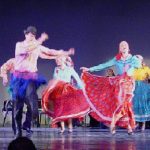
The Életfa Folk Ensemble is such a group. Although members of the ensemble are Hungarian American, they have traveled to Hungary on numerous occasions to learn to play authentic folk instruments. Their music is accompanied by singing and dancing in regional costumes, and it offers a comprehensive presentation of Hungarian folklore.
Folk music and dance as known in the villages and in the Tanchaz movement are rarely present in American Hungarian communities today. Major waves of Hungarian immigrants came to America before the turn of the century and after World Wars I and II, and the Hungarian Revolution of 1956; in other words, before the renaissance of Hungarian folk dance and music occurred in Hungary. Since they did not all come from one region of Hungary, their village folklore was not homogeneous. But they all embraced the popular national Hungarian culture.
Now one may understand the importance of the Életfa Ensemble. This is the first group rooted in the Hungarian American community that sets as its goal the dissemination and preservation of authentic folk music in the United States and Canada. The ensemble plays authentic folk instruments, sings folk songs, and performs dances. Thus, they present the same folk music and dances that Bartok and Kodaly may have seen and heard during their field trips to the villages of Hungary and Transylvania, almost a century ago.
Életfa in action


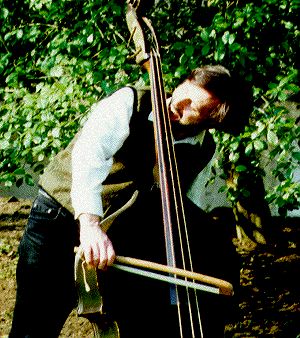

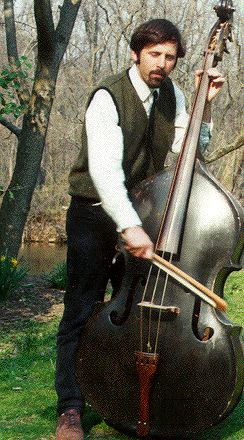
The band
Kálmán “Öcsi” Magyar
I’ve been playing violin ever since I can remember; they tell me I started playing when I was five years old. I studied at the Manhattan School of Music’s Preparatory Division as a child and teenager, where I was taught by the brilliant Stanley Bednar. After high school, I moved on to Duquesne University where I performed with the Tamburitzans. It was at Duquesne that I really learned about performing and “folk musicianship,” and had the honor of spending four years with some of the most talented young folk musicians and dancers in the United States. Upon returning from college, I moved to New York City and went to Brooklyn Law School, where I spent my time when I wasn’t playing gigs with Életfa and other bands. During some of my gigs, particularly those in Canada, I met up with an old friend from Toronto, Beatrix “Trixie” Nagy, and, to make an incredibly romantic long story short, we’re now planning our wedding. I am now a litigation attorney in Paramus, New Jersey, and still play those gigs. I’d like to recognize Mr. Bednar for all of his wisdom and guidance, not only with respect to the violin itself but regarding life in general – he has taught me more than he’ll ever know. I’d also like to thank Trixie for making that incredible romantic story possible, and for giving me the inspiration to create music in ways I never knew imaginable.
Ildikó “Ildi” Magyar
Hungarian music, dance and folklore are a part of the “roots” of our upbringing, and from this evolved one of the greatest gifts we could receive from our parents, the beginnings of our official music training. At the age of seven I did not realize where this would lead, nor could our parents foreshadow the chain of events that would occur as a result of their dedication, discipline, and support which they instilled in us throughout the years. I studied the Suzuki method, which led to 9 years of classical music training at the Preparatory Division of Manhattan School of Music. Here I studied violin under Stanley Bednar, who through years of violin lessons also passed on “lessons in life” which have stayed with my brother and I as jewels in all we pursue. I continued to perform with the Duquesne University Tamburitzans, an Eastern European Folk Dance and Music Group. These influences further broadened my musical and cultural horizons, allowing me to combine my love for folklore and performance with education, where I received a B.S. in Biology, PreMed. Since childhood, my summers have been spent in both Hungary and America participating in folk music and dance camps, which exposed me to the Táncház (Dance House) Movement and teachers such as László Porteleki, Viola Szabó, Márta Virágvölgyi, Béla Halmos, and Sándor “Neti” Fodor. I am presently finishing my last year at the Semmelweis Medical University of Budapest and plan to practice medicine in the United States. I hope to continue my parents’ dreams of maintaining my American-Hungarian identity and sharing this with as many as possible, as well as passing on this enthusiasm to their grandchildren…
Attila Papp
From shaking my three-year-old bum to the sounds of Lawrence Welk from a radio twice my size, to pressing jam-smudged fingers onto my first instrument (the organ, a gift from my parents) almost before I could walk, I have always loved music. Although a founding member of Életfa, I actually found my first footing in folk music through dance. Performing in venues large and small in the northeast and internationally with the Hungária Folkdance Ensemble, I became a soloist and associate choreographer of the group. Having developed a special relationship with the music first-hand as a dancer, I immersed myself into the bass and ütő gardon (percussive cello), and committed myself to creating an ensemble that would make a difference for audiences nationwide. I’ve been fortunate to have traveled abroad frequently to study idioms and techniques from the folk music masters themselves. Strangely, my degree in engineering helps me as much as my music degree in fostering an appreciation of the human spirit as expressed through song, and dance.
I recently retired as the organist at the Hungarian Reformed Church of Passaic, New Jersey, after fifteen years of service. Now I’m devoting more time to my family and beautiful wife of four years, Cynthia, who is herself a devoted folkdance performance artist, to an executive search firm I founded, and, of course, to Életfa and new music for you. If you’d like to reach me directly, I’m always happy to receive mail and questions at attila_papp@mail.com.
Natália “Nati” Zagyva
Though I was born and raised in Hungary, I fell in love with Hungarian folk dance and music at the age of 20. Music and singing has always been important to me; when I was a child, I sang in a choir and took violin lessons. Only later on, when I was studying physics at the Eötvos Lorand University of Sciences in Budapest, was I introduced to Hungarian folk music, and I joined the University’s folk dance group. I dusted off my violin and began taking violin lessons at the Budafoki Folk Music School with Beáta Salamon. I also studied folk singing with Klára Bodza. Thanks to Beáta, my greatest musical memory is when she took me to Szék, Transylvania, at the time when the villagers still walked the streets in traditional costume and the young generation regularly socialized at Tanchazes. Since then, collecting authentic village music and songs has become my passion. In 1994, I came to New York City with my husband, Géza Tóth, a mathemetician. I formed the “Zagyva” band with Raul and Heki, and in 1995 we joined Életfa. I am currently living in Boston with my husband, who works at MIT, and our two beautiful daughters, Lilla and Sára. It is a great joy for me to teach dance and perform as a musician and singer in America. In this way, I can spread my love for Hungarian folklore. A “Thank You” to Judy Olson and the Magyar family for having faith in me, and my husband for putting up with my late night practicing.
Raul Rothblatt
I was born and raised in San Francisco and started studying music when I was 7. I sang in the San Francisco Boys Chorus, studied cello and theory at the S.F. Conservatory of music, and eventually went to UC Berkeley where I did a double major in Music and Political Science. I then went to the Liszt Academy of Music in Budapest where I studied classical composition and got my first real taste of Hungarian folk dance and music. My mother had left Hungary in 1949 after surviving the Holocaust and married my father (who is not Hungarian) so I did not learn Hungarian at home, and only started doing so when I moved to Budapest. I came here to New York City to study musical theater composition, and I got a Masters Degree from NYU in 1995. I have since married my lovely wife, Laurie, and currently live in New York City.
Playing with Életfa is an essential part of my musical life, but my primary expression is as a composer of various genres including film, dance, musical theater and “World Music.” In 1998, I formed “deBand deBlatt” which combines African, Hungarian and jazz musicians to create something greater than the sum of its disparate parts. My approach to music is essentially to have a real understanding of a certain form of music before fiddling with it. I still have much more to learn about Hungarian folk music, but I feel I’ve gotten to the point where I can create new music and not mangle the traditions that sustain it. The purity of Életfa’s vision gives me the freedom to experiment in my other musical ventures
Visit my personal homepage.